Showing posts with label tagarab. Show all posts

23 January 2015

Who is King Salman?


The King is Dead. Long live the King!

Or so the saying goes. King Abdullah of Saudi passed away in the early hours of the morning, and was immediately succeeded by his brother, Salman Bin Abdulaziz.

What this means for a region in the middle of uncertainty is not immediately clear. The threat of ISIS throbs against the Saudi borders, while the low price of oil has promised a shock to the country's economy for the coming period. Add to that regional tensions following the "Arab Spring", as well as Saudi's own internal tensions, and you've got a ticking time bomb.


Let's take a look at the new monarch, King Salman, and who he is:

- Born in 1935
- Governor of the Riyadh Province from 1963-2011
- Saudi Minister of Defence since 2011
- Appointed as Crown Prince and Deputy Prime Minister in 2012


Headed the Al-Saud Family Council, and is considered to have a conciliatory and diplomatic nature, being actively involved in mediating many internal family disputes.

Strong advocate for philanthropy in poor Muslim countries such as Somalia, Bangladesh, Sudan, Bosnia, and Afghanistan.

He is regarded as intelligent and hard-working, honest and law-abiding (his governance of the Riyadh Province was reportedly corruption-free).

Very involved in media, with his family owning Asharq Al-Awsat and Al Eqtisadiah newspapers, as well as a percentage of the Saudi Research & Marketing Group (which publishes Arab News and others), as well as having connections to liberal e-newspaper Elaph and strong alliances with many journalists and TV-News directors in the region.

In terms of views on reform, King Salman had previously said that reforms, for social reasons and not religious reasons, cannot be imposed by the Saudi Government as there will be negative reactions, and the pace and extent of reforms depends on social and cultural factors.

He is considered to take more of a diplomatic approach to opposition figures as compared to other Saudi royals, but is not necessarily a political reformer. He is also considered to be, as King Abdullah before him, more focused on economic improvement of the country rather than political change.

With all that being said, how the new King handles the country for the next coming years will be a very significant factor in the development of the immediate region, and will have repercussions regionally and globally. Long live the King!


27 November 2013

The World Knows Who We Are

I was probably 11 or 12 years old at the time, comparing what we had in the Gulf to the West. The West had all the cool movies. They had all the cool products. All the cool restaurants. They were the scientists, the nobel prize winners, the countries that hosted the big events, the big money. We could catch a glimpse of their world through a TV screen once in a while when a western show or movie aired, and maybe if we were lucky enough to find one of their magazines in a store, we could flick through and see what they had. It was a bit of a dream world to most of the people living here.


A few years earlier my family had lived in the UK - I would say I primarily grew up in London; arguably the center of the world at the time (either it, or New York). It was a different planet from the Gulf. Everything was available in terms of products, media, events, theme parks, and creations. They were 'developed'. We were still behind. Light years behind.

Back in Bahrain (this was somewhere around the early 1990's), getting your hands on a western toy or comic was quite a feat, and was the sort of achievement you'd take along with you to school to show off to your classmates, much to their ooh's and aah's.


I remember thinking and wondering why the West had so much. Why everything they made was seemingly magical to us, while we didn't even register on their radar ("Where/what is Bahrain" was an almost standard reply when I told people where I was from).  I knew the Gulf had to wake up, and move faster, and achieve something. Just something to catch their attention. I wanted to help this region grow and develop, but what can I do as a 12 year old kid with a head full of dreams?

My family travelled considerably after then, back to London, Los Angeles, Paris, and so on. But we were back in Bahrain in 1997, and I was ready to graduate from high school. My original options were somewhere between the UK and the US, but for some reason I ended up going to university in the UAE (long story, ask me later). Dubai was just starting to break out of it's shell at the moment.


My first indication that things were starting to change was around 1999. One of my friends had gone to Australia for a holiday, and when he came back, we discussed the comic book scene there (he was a comic book collector). To my 'shock', he told me comic books were more accessible in Dubai than they were in Australia. But how could that be, I asked myself? Australia was a developed country, wasn't it? They had access to all the media, the products, and so on? But for some reason, we had more access to them in Dubai.

I remember being on an American car forum again around the year 2002, discussing the Skyline GTR (a pretty fast, if a little rare japanese vehicle). Some of the Americans on the forum mentioned hearing about a place called Dubai, being the number one importer (from Japan) and exporter (to the rest of the world) of Skyline GTR's. That was a little shocking; how could these random Americans in the middle of Texas even know about Dubai?

Our region grew and grew from there onwards and these 'moments' became more frequent. I stepped into a taxi in Italy in 2005, and he asked me where I was from; I said Bahrain, knowing very well that he probably would not recognize the country - but he said (in a very stereotypical Italian accent) "Ahhh Bahrain, Formula Uno!" Another was discussing the Abu Dhabi Louvre with some random passer-by in France in 2007. Asking a London travel agent about destinations in 2008, to which she replied, Oman. Talking about the Qatar World Cup in London in 2009. And so on.


And to top it all off, the announcement made just a little over an hour ago, with Dubai winning the right to host the 2020 World Expo. Even before the announcement, I could see tweets and facebook posts from people I know from Lebanon to Los Angeles to Lagos, talking about Dubai. The whole world is looking at us now, the world knows who we are. Although some may see this as the 'importing' of major global events, brands, and trends, what you can see if you look at closer is how we are creating our own as well. The fashion designers, the films, the TV shows. We've built some of the best/biggest airlines in the world, innovative solutions like Masdar and are slowly starting to export what we have to the rest of the world. Who in their right mind would have thought you could walk into the middle of New York and see the Emirates and Al Jazeera logos plastered everywhere, or walk into Harrods in London and grab some Chapati and Karak? And put all that aside for now; people from the West are coming here in hordes trying to get jobs, start businesses, or just explore.


Sure, some Gulf countries were slower to make the transition than others, but the growth is amazing for the region as a whole, and with the right effort we can all benefit from this. We're the cultural and economic heart of the region, and looking further ahead, maybe even the world. We've made it here; the world knows who we are now. And we're about to make waves, lots of them.


18 November 2013

Dubai Air Show, an Awakened Gulf, and Bahrain

I don't regularly blog anymore, and this is going to be a bit of a bittersweet post, but after seeing the amount of power the Gulf has in it's hands after yesterday's Air Show, I figured I have to start screaming somewhere. Might as well be my blog.

Anyhow; yesterday was the first day of the 2013 Dubai Air Show. The behemoth of the airline industry in the GCC is Emirates, which has very casually decided to order $100 billion dollars worth of planes. The notable runners up are Etihad and Qatar Airways, with a combined $50 billion worth of orders.


Now on the surface, and to the uninformed, this seems to be a bunch of rich sheikdoms throwing around their god granted oil money. But look a little deeper; if this was just about money, perhaps Kuwait should be a notable entry, with a higher GDP than either UAE or Qatar. Or, maybe Saudi, with more than double the oil revenue of the next closest competitor. You can't just build a massive airline out of thin air if you had money. Sure, you can start one, but without the right strategies, direction, management and so on, it won't last too long no matter how much money you throw at it.

Back in the 80's, the GCC was made up of a bunch of oil-rich countries with a lot of money and no incentive to use it to build up the country. Emirates Airlines was started by the Dubai ruling family in the mid-80's with an aim to turn Dubai into a regional business hub. With a very focused strategy over the next 20 years, they managed to pave the way for the world to have easy access into the city, and through that (and a very solid growth strategy) expand into a global superstar. As this ridiculous growth caught the eyes of the other sheikdoms around, they wanted in on the global game, and so began the story of the hyper-growth of the GCC.


Of course, some countries raced ahead while others lagged behind. Money played a contributing factor, but some did better with it than others. Look up now, and you'll see cities that people didn't even realize existed 20 years ago are buzzwords on the tongues of tourists, businessmen, politicians and even average citizens, all the way from Seoul to Sao Paulo.

To top it off, at the Air Show yesterday, Etihad, Qatar Airways and Emirates single handedly gave a life-line to Boeing with it's largest ever combined order of $100 billion. And with that kind of money comes power - Sh Ahmed Al Maktoom (Chairman of Emirates Group) turns around and casually says to the West, you give us the landing rights we're asking for (there have been arguments over landing rights for Emirates etc in the West over the past few years), or we're going to cancel these orders.

In other words, you're playing 'our' game now.

All sweet so far, right? The growth of a region, the increase in both economical and political power, the developments within it, and so on. So where's the bitter part?

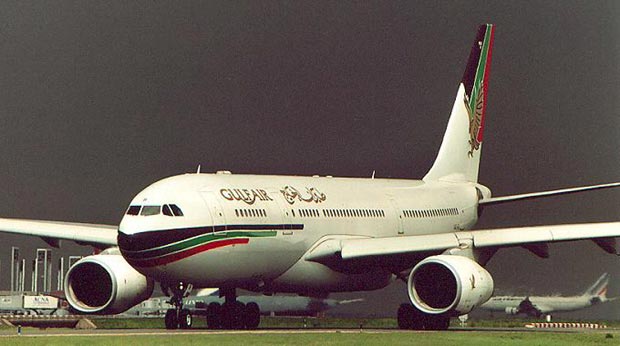
I look at our tiny little Bahrain, so motivated and always starting new trends being slowly pushed to the side. In fact, they don't even have a noticeable participation in the Air Show; sure I understand we have our own in January and we're probably saving whatever loose change we have to sign deals there, but either way... We started the whole aviation thing in the region. Gulf Air was formed way before any of these other airline, back in the 1940's. And sure, we grew, and eventually Bahrain, Qatar, Abu Dhabi and Oman all decided to come on board as shareholders.


But I think the turning point was in the 80's - Dubai, back then a little desert village with nothing but huge aspirations, kept requesting more flights through Gulf Air, to which the airline turned around and said, no. Not being one to wait for things to happen, the ruling family of Dubai decided to start their own airline, Emirates, and from then on, it's growth, and with them the growth of Dubai astounded everyone.

To the point where Abu Dhabi and Qatar eventually decided, hey, we should have our own airlines too, and left Gulf Air. That's not necessarily a bad thing for GF - they can grow better with more focus, right? But no, the airline kept tumbling deeper and deeper into losses, corruption and one problem after the other. Oman eventually seceded from the airline, making it a pure Bahraini burden. On a positive note though, I guess we can say the reason Emirates was created, Dubai grew, and following that, the whole GCC ended up growing is because of Bahrain (denying Dubai more flights). Ironically now, Gulf Air's busiest route is to Dubai. Funny how time changes things.
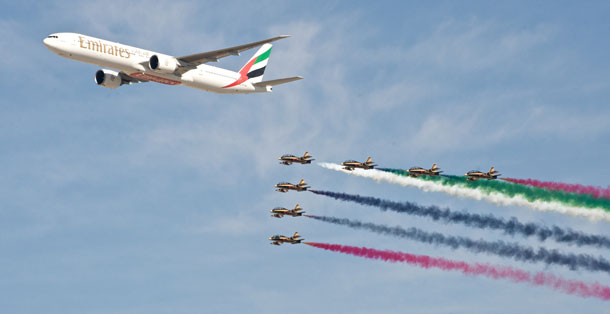

I'm happy for what we've managed to do in the Gulf overall, and how we've managed to literally sit on top of the world through our airlines. But again, looking at Gulf Air's sad decline from being a true Gulf airline to one that is just an after-thought, even in the mind of the average Bahraini traveller, makes me feel a little bitter inside. And this follows through everything else in Bahrain - we start all the trends, we have the first hold on any new idea, but for some reason we fail while everyone around us grows. We're smart, we're motivated, we have so much potential in us, but that's all it remains - just pure potential, with no follow up.

I think it's less of feeling sad and more of feeling let down, or disappointed. We all gave tons and tons to the country, and after all that's happened we see it remain relatively stagnant. Maybe it's just a curse. Or maybe it can be fixed. Or maybe we lost hope. Don't get me wrong; I still love our little island, and that won't ever change, but sadly she just feels like the lazy offspring that ended up not achieving much in life while all it's siblings went on to become CEO's and presidents. 

17 January 2012

Buy Snickers get Free Gas

Saudi has a lot of oil. A lotttt of oil. Tons. To put a figure, approximately 270 billion barrels, give or take a few billion. A fifth of the World's proven reserves. Do you have any idea how much that is?

Let's try to put things in perspective. If you were to live to 100, that means you're living a total of 36,500 days, or a total of 876,000 hours. At today's crude oil price, a barrel is somewhere in the range of just over $100, so (assuming nothing changes) if Saudi pumped 300,000 barrels ($30 million worth) for every hour you live, they'd still have enough left over to make another trillion dollars after you died.

That's a lot of oil.

Now, with that type of income potential, the Saudis can do practically anything they want. So what do they do? They give some away free with every bar of Snickers.

What?

Yup. This shot of a Snickers ad was taken by @FahadKD on Twitter, who is, funnily enough, a corporate advisor in the Energy sector. It's a new, actual campaign in Saudi, where you get one litre of gas for every Snickers bar you buy.


The campaign has already been launched, and it's all over Saudi at the moment, but it does raise a number of questions. Okay, we understand oil is subsidized in Saudi; in fact, it's one of the cheapest places in the world to buy gas at the pump, where filling the average car up rarely passes the 50 riyal mark ($14). However, how justified is it that a corporation can use subsidized gas in it's campaign to sell of a candy bar? Are we just throwing our gas away? Sure, 270 billion barrels isn't going to finish overnight, but that doesn't justify just giving it away, or does it? Do we just have so much oil that we don't know what to do with it?

Whatever the thinking behind it, we'll see what the local papers have to say about this over the next few days. For now, i'm going to grab a Snickers.

11 January 2012

Saudi & the Cinema

Depending on which part of the world you are visiting this blog from, you may or may not know this; Saudi Arabia has no cinemas. Nope, none at all. They're illegal, banned, immoral, haram, shaitan. What the reasons are behind them not being allowed really don't make sense to me, but then neither do a lot of Saudi laws.


My best guess on why cinemas aren't allowed is that they would they would encourage mixing of sexes, although that could probably be solved through separate seating. The other reason is the content being shown, although to me that doesn't make much sense since pretty much every household has access to both Satellite TV and internet. Also, you could always censor certain scenes (or depending on the movie, whole parts). We're pretty used to censoring scenes in Bahrain & UAE; I don't really mind if it's a pretty upfront sex scene, but sometimes they seem to cut random things out of the movie leaving you with a 'WTF just happened there' moment.

Whatever the reasons behind it, it's pretty clear that going to the cinema has become a bit of a tourist attraction for Saudis whenever they leave the country (that would explain the sharp increases in ticket sales on Wednesday and Thursday nights in Bahrain). Statistics (verified or not, I don't really know, but these were compiled by Saudi) show that a quarter of a million people visited UAE in 2010 JUST to go to the cinema. Pretty hefty number just for movies.

Recently, the Saudi Ministry of Culture & Information has made an announcement, saying it is ready to support the opening of cinemas in the country, as long as the government approves and gives the go-ahead. The Mayor of Riyadh also recently mentioned they are in the process of setting up cinemas in the country. Put it all together and it seems fairly likely that Saudi will finally have cinemas, and pretty soon.

Woohoow Saudi, finally turning into a country of sin.

2 December 2010

Qatar 2022


Yes, it's official and was announced just minutes ago by Fifa! After stressful days and weeks of pushing together to make this happen, the five contenders left to bid on the 2022 World Cup were the USA, Australia, Japan, South Korea, and Qatar.

A country that wasn't independent 40 years ago, and hardly anyone had heard of until a few years back was now a contender to some of the World's most powerful/biggest nations? What is this Qatar they speak of? No one knew Qatar. In fact, Qatar was portrayed in the major Hollywood blockbuster, Transformers, as a desert where Bedouins live in tiny broken houses, and store their phones in locked boxes. What is Qatar, really?

A small country with big aspirations. With a vision. With a dream. And with enough cash surplus to take over the World; within the past few years it's gone from a little known nation in the Middle East, to having the highest income per capita, to building universities and schools, to being a mediator of peace in the Middle East, and much more. And the legacy grows.

And then the bid presentation came in, and Qatar displayed with elegance, with class, with vision, and blew everyone's minds away. Was that the really the Qatar we would know 12 years from now?

Dubai was a little known town back in the 1990's. It now sits in as one of the most well known spots in the World, and it did that in just over a decade. Qatar has a plan, and is chasing it, and will probably do what Dubai did in less time, if the work of the past 3 years is anything to judge by.

And then the day of the 2022 decision came, and people were on their toes. Millions around the World gathered to watch the announcement; this wasn't just for Qatar. This was for the GCC. This was for the Middle East. This was for all the Arabs. And as the envelope with the decision was slowly opened, you could feel the tension rip through everyone.. Until it was announced.. The 2022 World Cup will be held in...

Tension. So sharp you could cut someone's throat with it...

...QATAR! And millions rejoiced, some shouted, some cried, some laughed.. And for the first time, the World Cup was brought to the Middle East...

And the rest, is to be for the history books...


HH Shk Moza Speech:


Qatar 2022 World Cup Video:


Link to the full Bid Presentation (35 minutes long, but worth watching)

25 May 2010

Gold ATM's n Stuff

I haven't been terribly active over the past few months; a post once in a while complaining about stupid MP's etc.. There will be quite a dramatic change to the site pretty soon though, and I think i'll probably start writing a lot more **sound of everyone rejoicing** so what better way to start off than with a happy topic? Sure, the world has managed to go through a full financial crisis, people lost jobs, huge companies collapsed, people went bankrupt, etc. One entity that has managed to benefit through the turmoil, however, is our neighboring state, Abu Dhabi.

Yup, with Dubai out of the picture, enough oil to ensure constant cash liquidity throughout the crisis, and one of the biggest sovereign funds in the world, they've managed to reach a point where even global powers such as the UK were begging them for money. Lovely.

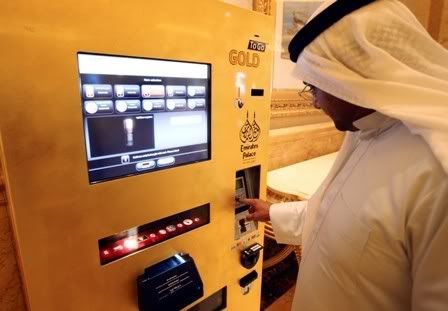
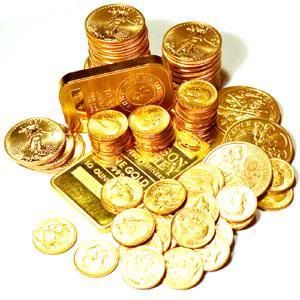
With Abu Dhabi having so much wealth, what better way to prove it than by giving it's residents an even more opulent way to get their cash? Enter the Gold ATM. Yeh, umm, I don't mean an ATM that's just covered in gold. No, I mean this baby is for those who think withdrawing your regular 200 or 500 dirham note is a bit, you know, lower class. This baby actually gives you.. *drum roll* actual gold. **pause for dramatic effect**


Why anyone would actually need to go and withdraw gold, however, is beyond me. You can withdraw gold coins and bars, all in pure 24 carats, and if really up your alley, you can even print a logo or something on them. Apparently the first run of gold ran out pretty damn quickly.


It's good to know there are people with so much money that any form of common sense is stripped from their mental state; this just means we can probably rip them off easily with another bogus project. Coming up next, the Ammaro Diamond Dispensing ATM, and here's how I would price it:

Actual price of diamond - $200
Ammaro markup - $800
Ammaro Tax - 20%
Service Fee - $150
Stupid Tax - $150
-----------------------------
Total paid by millionaire for a $200 diamond - $1500

Of course, to make it more appealing, millionaires love to show off how rich they are, so each person who withdraws a diamond gets to have their video taken while withdrawal, and uploaded to YouTube, the AmmaroDiamondATM site, and a few others, to show everyone how rich (stupid) they are. That option, of course, requires an extra $500 online service fee to be added, but hey, it's worth it if you could keep that memory forever, right?

The things too much money can make you do eh?

4 January 2010

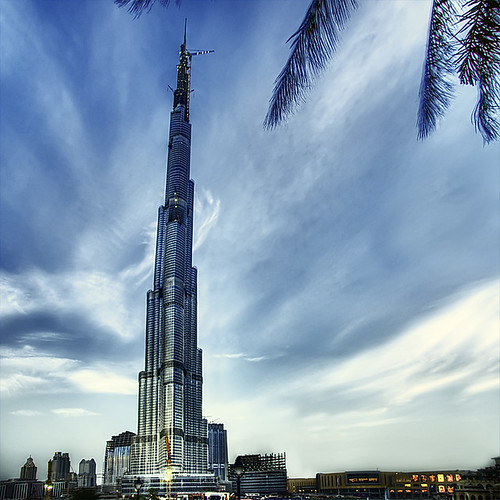
Tallest Building in the World...


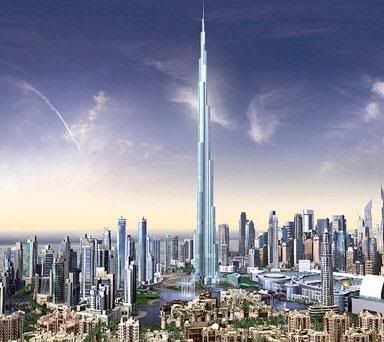
Burj Dubai's grand opening is TODAY! Construction was initiated in the midst of a financial boom, one that catapulted Dubai from little unknown Arabian city to a global hub known all around the world. Today Dubai (and the rest of the world, infact) are in the middle of the crisis, and many people questioned the building being finished... But here we are, anticipating the grand opening today, 4th of January.. Mabrook Dubai!

Here are some little known facts about the Burj Dubai that you can tell friends:

- Burj Dubai is so high that when you are standing at the top, you can actually see the curvature of the earth's surface

- Burj Dubai is so high, that with the creation of a non-moving entity that far up in the sky, it caused the magnetic fields of the north and south pole to shift a little bit

- It is so high that a person on the top floor and bottom floor are on two different time zones

- Burj Dubai is so high that if you drop your watch from the top, you can take the lift to the bottom and catch it before it reaches the ground

- If you stood on top of the Empire State Building, New York, on a clear day, you can actually see the tip of the Burj Dubai

Okay, so maybe they're not true, but they're still cool to tell people and see the reactions on their faces. Mabrook again Dubai!

29 September 2008

Sorry! Can't wear that!

When does it start getting too much? When does it start pushing the boundaries of religion and common sense, and just moves into the territory of plain stupidity? Well, for Saudi Arabia, that line has probably been crossed so long ago, no one remembers it even existed.

We all know the Saudi system is a bit on the extreme side, but somehow just as the world starts to think that maybe, just maybe, things in the country will start to improve, they come out with new rules and laws that assures us that the country will remain in the dark ages for quite a while.

We understand the extreme side to interpreting religion; so you want to cover up your women and make sure that the smallest area of flesh doesn't show. We get that. You don't want your women to drive, so that they don't go out alone, either to be flirted with, or to have the power to go wherever they want whenever they want (obviously to flirt with guys). We get that too. We get all of your other stupid and nutty rules, not through logic or common sense, but through endless exposure to them. But one thing I don't understand, is this new rule;


Saudi religious police in abaya crackdown


Saudi Arabia's religious police are cracking down on adorned abayas in the run-up to Eid Al-Fitr and have threatened shopkeepers with fines and even prison for selling the black robes with any form of decoration.

Shopkeepers in the kingdom's capital Riyadh said they are having to turn away customers, many of whom are looking to buy more fashionable abayas with patterned, beaded or colourful trim, the UK's Financial Times reported on Saturday.

Decorative abayas are becoming increasingly popular in the Gulf as women's dress codes are relaxed. However the liberalisation, though only slight, has angered some conservatives...


Full Article

Now let's try and get some thing straight here; women in Saudi Arabia are not allowed to dress up in anything but a black robe, have to cover their hair and face, and so that's totally destroyed all chances for women to have any sort of personality. Now the only small personalization they're actually able to do, is put a few basic designs on their abaya (which aren't really very extravagant) and now even that's being taken away from them?

What do you expect them to do? Give them no other choice to do anything in their lives? There are some serious issues here with the current state of Islam, and not just Saudi Arabia; the phrase of the year (or the past few years to be exact) seems to be "ban it". If they don't like it, they ban it; whether it's a TV show, a type of clothing, or anything else.

There's something very flawed with this theory. When you ban something, without providing something else to replace it, you get a void. When you ban something else, again without a replacement, you get a bigger void, and so on and so forth until there's a ridiculously huge void in people's lives, which they start to fill with negative actions. Want proof? Just watch some of the Saudi's that cross over the causeway to greet us on weekends.

What's wrong with the religion of Islam nowadays, is the extremist nuts that sit at the top. Somehow we need to eliminate those from coming up with ridiculous rules and laws, but whose to stop them without them using their "you're going against Islam" card?

Complex problem. Anybody got a solution?

27 July 2008

Divorces, TV shows & Fatwas

You know Islam has reached a new low when it's clerics start forbidding popular TV shows.

Over the past few months, a hit Turkish soap under the name of Nour was aired on MBC; nothing really extra special about it, besides the fact that Muhannad, the main actor, is (supposedly) a charming romantic hunk. As the months passed, the show started to gain increasing popularity, as many tuned into to watch the tragic love story.


Soon after, however, something funny started happening. News surfaced of a husband in Saudi Arabia who divorced his wife after her constant obsession with Muhannad, and her constant complaints that he should be as romantic as the actor.

A Jordanian newspaper also mentioned a divorce, sparked by a jealous husband after his wife uploaded Muhannad's picture onto her cellphone.

Another case included a divorce after a heated argument, where the wife reportedly told her husband: “I want to sleep with Muhannad for only one night and die afterwards.” At least five other 'Nour-based-divorces' were reported, and the way it's going, there are probably a few more to come.

Hmm.

Ok, so we already know Middle-Eastern people have issues, but divorces over a TV show? Come on guys...

But it doesn't stop there. The all-knowing, all-wise mufti's (high-level holy men) have to butt their heads into the situation, and make the whole thing a religious issue:

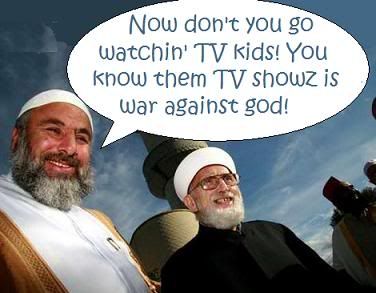
Mufti of Saudi Arabia prohibts watching the TV show Nour

The Saudi Mufti, Sheikh Abdulaziz Al Sheikh has described the Turkish soap 'Nour' which aired «MBC» as «criminal, malicious and harmful». He added; «It is a sin to watch the show, which is a plague of evil, a demolition of morality and a war against virtues».

Al-Sheikh said in his fatwa published on the Internet yesterday in response to a question about the Turkish soap: The broadcast of the soap is a «declaration of war against Allah and His Messenger», pointing out that Nour «calls for and encourages vice, helps spread it, and supports it's causes».


Errrr... Ok dude; I understand if you don't really like the show, but is labeling it 'a plague of evil' really an appropriate description? I also love the part where he mentions how airing it is declaring war against God. Yep, sure, that's what MBC was thinking when they decided to broadcast the show:

MBC Executive #1:
Hey, you wanna go to war against god?

MBC Executive #2: Yeah, let's do it! I have the perfect attack plan!

MBC Executive #1: Really?! Tell me!

MBC Executive #2: We'll broadcast this Turkish soap called Nour! It's a definite no holds full out attack!

MBC Executive #1: Yeah! Let the devil join us tonight! MWAHAHAHAA (evil laugh)

?!

Umm, yeah... Okay... I'm hoping to catch that last episode of Bold & the Beautiful before they start banning that, too.

Aren't you sick of these supposed holy men making a total mockery of the religion? I guess we really need to get some new mufti's up on that fatwa-making chair. Any takers?


The original Turkish version of Nour is called Gümüs, and Muhannad is played by Kivanç Tatlitug

Link to original Fatwa article (in Arabic)

20 January 2008

My Problem with Authority

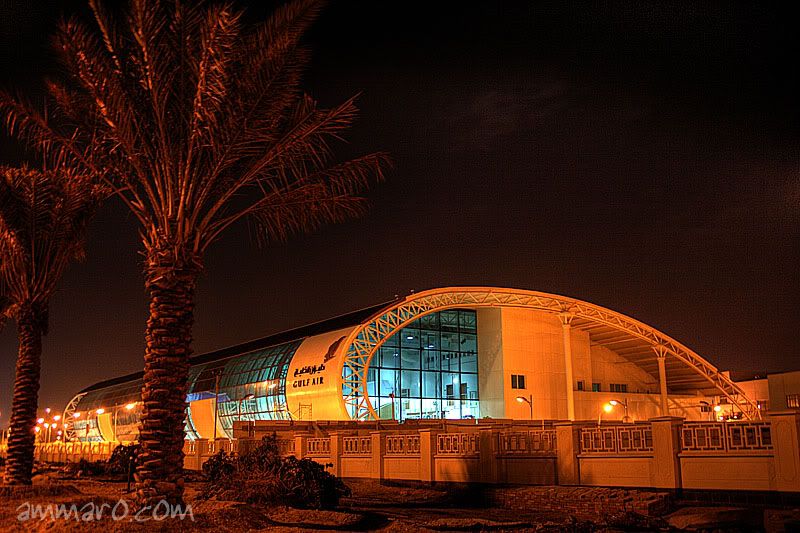
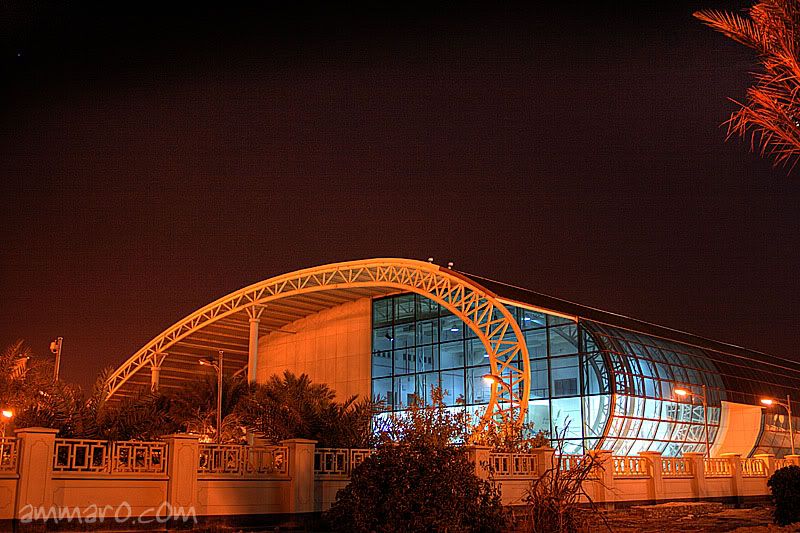
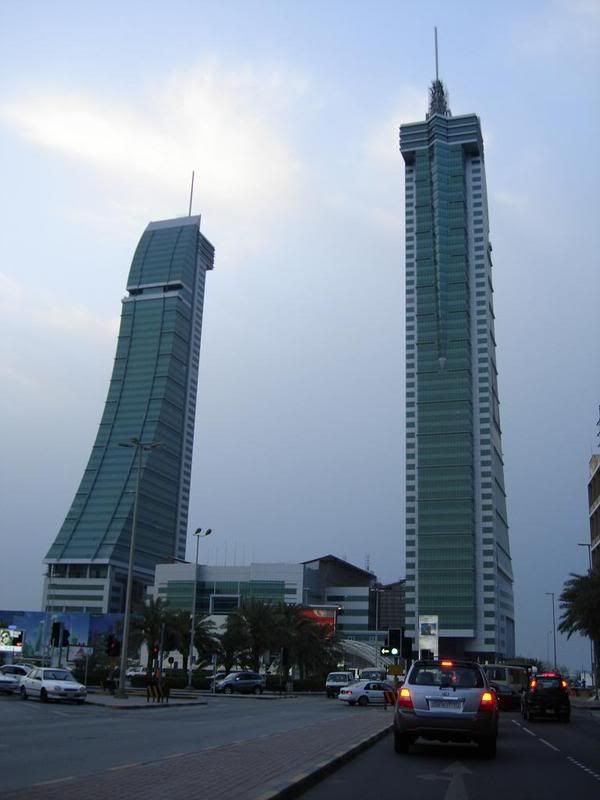
I passed by the new Gulf Air building next to the airport yesterday; it's a wierd design, some sort of curvy shaped thing made out of glass. I decided it might make a reasonable photo, and so decided to stop and get down; for some reason there are no parking spots anywhere on this main road. There was an emergency parking spot a minute or two away so I went and parked there; took out my camera and tripod and walked over to the building.

Took a shot or two and I heard a whistling noise, but I didn't really pay it much attention and kept going. The whistling continued, so I turned around; some dude was standing by my car whistling to me. I looked at him and figured if he has the decency to want to say something, he can come over rather than whistle to me. I'm not a bloody dog, you know. I kept taking photos so he walked over; he's obviously some sort of Gulf Air security personnel, judging by the way he was dressed.

Now before I mention the conversation that ensued, you have to understand one thing. In this region, you give any person a little bit of authority, and they think they're some sort of god; they'll talk down to other people, expect others to consider them something great and follow their every word. And the truth is, most people actually do worry when being talked down to by "a figure of authority". However, if you want them to lose their balls all you have to do is talk down back to them:

Security Dude: What are you doing? شتسوي؟

Me: Is there a problem? نعم اخوي, في شي؟

Security: You're taking photos اشوفك قاعد اتصور

Me: No, really? I know i'm taking photos, is there a problem? احلف؟ ادري اني قاعد اصور, في شي؟

Security: I'm security (actually thinking this would scare me) معاك الامن
(عباله يخرع)

Me: I know dude, so what? Again, is there a problem? ادري اخوي, المهم, في شي؟

Security: (confused that i'm not fazed) Erm... Do you have a permit for taking photos? اه... عندك تصريح علشان تصور؟

Me: I'm taking photos from the main road, why the hell would I need a permit تصريح شلا؟ انا قاعد اصور من برة المبنى

Security: (again, getting worried) Uh.. Which magazine or newspaper are you from ام... انت من اي جريدة او مجلة؟

Me: Dude, i'm not from a magazine, i'm not from any newspaper, i'm taking photos for myself. See that gate? I'm not standing inside it, i'm on the main road, so I don't need a permit. People driving by can take photos from their car, I don't see you making a fuss. Now, if there's a problem, go ahead and tell me, otherwise please go back to whatever you were doing. انا لا من مجلة و لا من جريدة. قاعد اصور حق نفسي. شوف السور هناك؟ انا ما طفت السور, انا عالشارع الرئيسي, احتاج تصريح ليش؟ الي يطوف بسيارته و يصور اتقولون له شي؟ المهم, اذا في شي, قول لي, واذا مافي رجائآ توكل اخوي

Security: (now sort of trembling) Erm... Ok... Thanks... ام.. اوكي.. مشكور

Dick. Seriously, I hate people who think they're all that. I would have more than talked to him nicely if he had come up to me nicely, but sitting there whistling thinking I would obey his every command? Prick. He shouldn't have messed with the ammaro.

But the thing is, this isn't just about me talking back to a security guard. We have a sort of epidemic in this region, and whenever someone gets any sort of power or authority, they think they're better than everyone else. I've seen it, whenever you give someone a position as a manager or supervisor somewhere, as a security, or even as a doorman at a club or so. I don't care where you work, or what authority you've been given, you have no bloody right to talk down to people, and don't expect that you're going to get any respect just because you showed your muscle. If you want respect, you better earn it. That guy deserves walking away with his tail between his legs.

Anyway, just for your enjoyment, here are two photos of the building in question, lol (click for large):


I still don't understand why he stopped me. It's a big building made out of glass. Yes people, glass. The whole thing is see-through. It's not like I was trying to extract any damn secrets!

5 December 2007

Fikr6; Final Thoughts

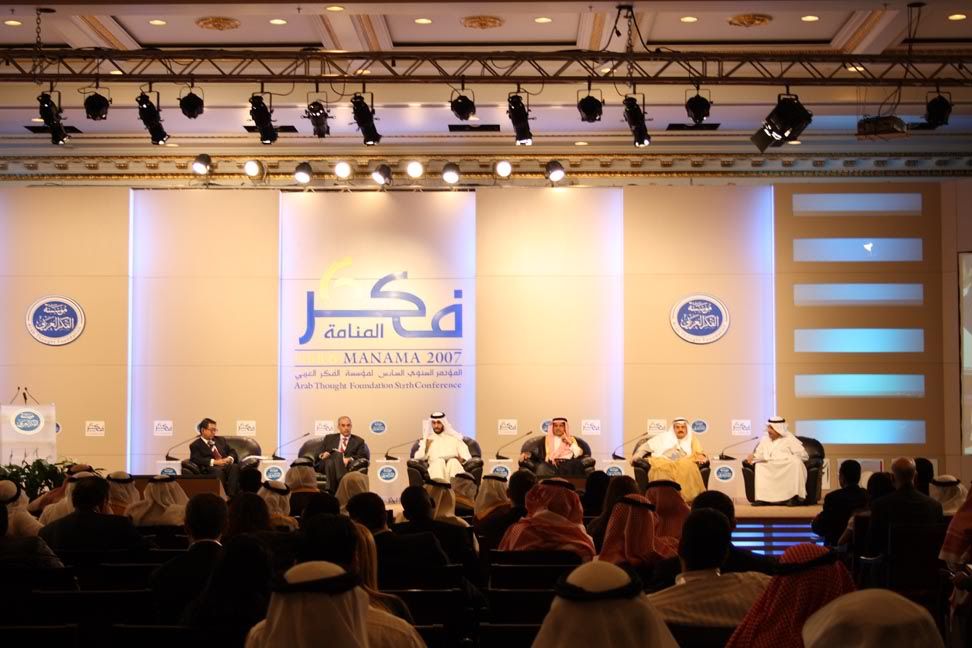
After a three day fiesta, the Fikr6 conference has come to an end. Overall, the conference covered many issues of interest to the Arab region, discussed concepts for growth and adaptation in the growing world, and dealt with strategies for the future.

The final day was again filled with more hot topics and heated discussions, and although I will not go into detail over the specific subjects, a number of interesting concepts were raised:

- Role in Globalization
A question was raised over what the Arab world has contributed to the process of Globalization; the answer was "We buy. The world produces and we buy". This does make you think, considering that we have become consumer economies rather than producers (with the exception of oil). We don't export motor vehicles, we don't export electronics, we don't export technology, and so on. People don't travel to world to attend our universities, people don't leave their countries to recieve our healthcare.

Sure, a few countries do produce and offer services to a certain extent, but overall the general notion is that we consume. Essentially this means that most of our money is not being used inside our countries, and is slowly being pumped out of the region. Cash inflow from outside the region isn't very outstanding either, and besides the petroleum (for a few countries) and to a certain extent, investments, what else do we really have to offer the world? Isn't it about time this started to change?

- Arab Unity
Everyone seems to be talking about Arab unity, a single strategy, a single plan. Although this is a great idea, why do we restrict ourselves to it? Why wait for this to be a pre-requisite? Unity of the Arabs, and a single strategy is going to take a long time to create, and a lot of politic, economic and societal issues will come in the way before it is achieved. Before creating this unity, each country needs to take it's own initiative and finds it's own strengths, and build upon those. A collective strategy could be placed parallel to each country building on itself.

- Private Sector Innovation
In terms of innovation and action, the private sector in our countries needs to make big steps. The past has shown that most big initiatives in the region were started by the private sector, and after reaching a large enough size, were then taken on by the public sector. Example in point; Bahrain. Real-estate investment and properties were not very big on the government agenda, but as the private sector (initially with the investment banks) started pulling in investors and proving that this was infact a very profitable business, the government took notice, and started to become more and more interested in the concept, until finally placing it on it's list of priorities.

The public sector can help build initiative by changing legislation and so on, but most schemes are usually started through the private sector, and support should be provided to them to come up with new proposals and ideas.

- Strategy vs. Action
Strategies and plans have been discussed between the Arabs for years and years; a plan to compete in the global markets, a plan for growth strategies, plans for unity, plans for production, for diversification, and so on.

Till when will we keep talking about strategies and plans? This is the time for action.

Overall, the conference ended on a great note, and hopefully some of these ideas will be delivered to the decision makers in our region, helping us to evolve. The whole experience was exciting, and truthfully I think we need more of these events, to bring us together to discuss ideas, thoughts, and experiences.

3 December 2007

Fikr6; Gulf Currency & Financial Markets

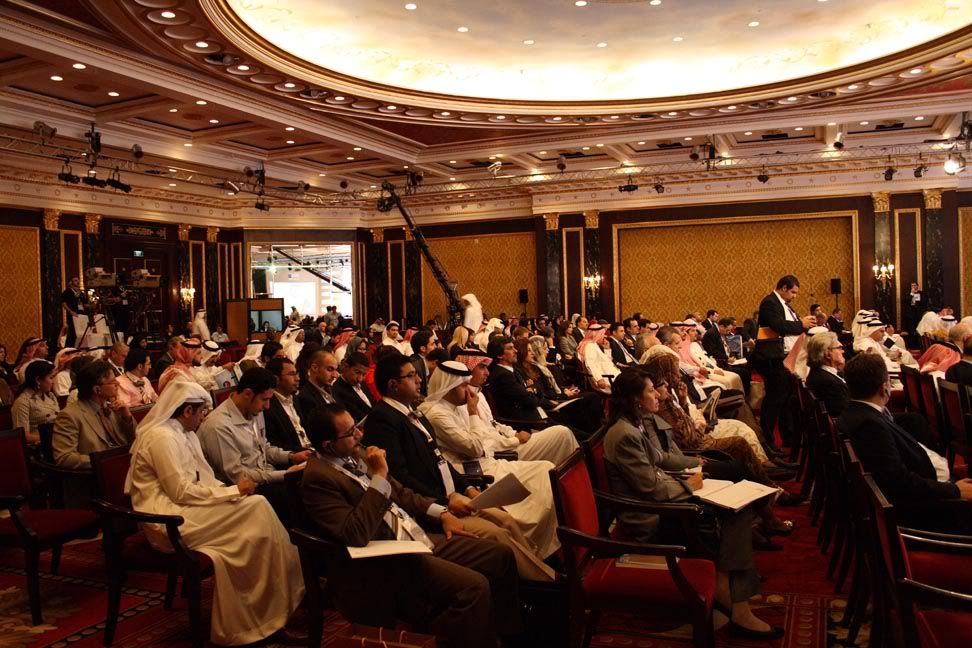
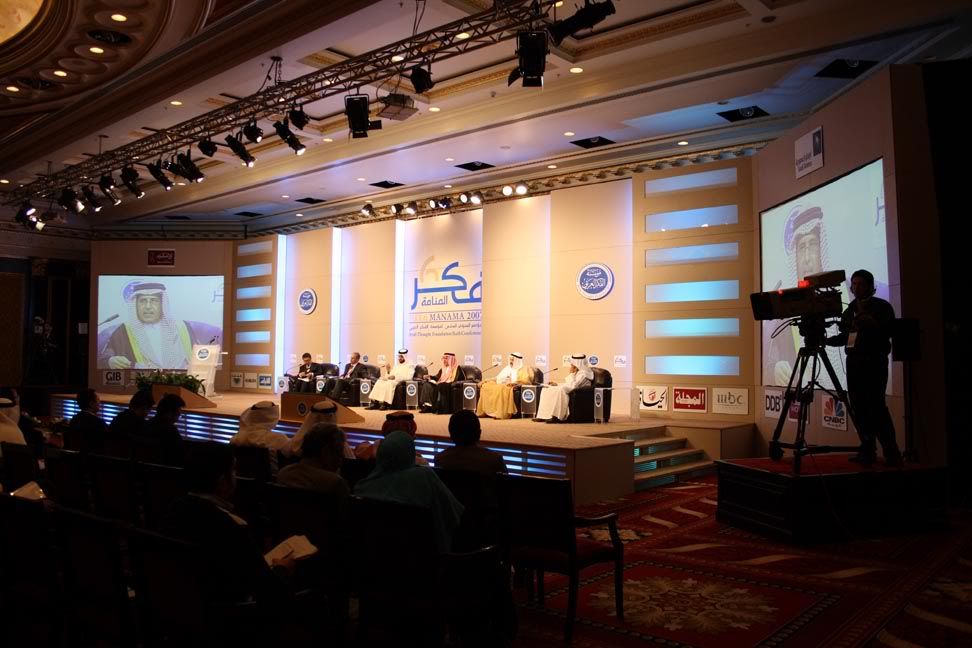
Fikr is an annual conference held by the Arab Thought Foundation, that brings together Arab leaders from all corners of society, be it business, technology, education and so on, to discuss strategies for the Arab world to face in the ever changing global society. The Fikr conference is a place to exchange ideas and experience between Arab intellectuals, and as it was held in Bahrain this year, I was fortunate enough to get a chance to visit.

The conference spans three days (1-3 Dec, 2007) and the agenda covers a workshops, discussions, and talks spanning a number of issues including technology, investments, energy, social responsibility and many more.


Of particular interest to myself (due to my background) was the discussion regarding the Gulf currency and financial markets, of which I will talk of about in more detail. If you have any interest in other issues, please visit Mahmood's Den, as he highlights the other Bahraini Bloggers that have volunteered to cover the event.

The Gulf currency discussion was a very interesting one, bringing together some of the heavyweights of the gulf financial markets, including Raja Al Bakmi, Chairman of the Monetary Union council for the GCC, Faisal Al-Mutawa, Managing Director of Bayan Investments Kuwait, Rasheed Al-Maraj, Governor of the Central Bank of Bahrain, and a number of others.


The discusson started off by pointing out the fact that the Gulf countries do not currently have much long-term wealth, but are infact in state of temporary liquidity where money seems to be floating all around. This is obviously not going to last forever, as the oil wells will dry out sooner or later, and therefore much of this liquidity needs to be used in building infrastructure, strengthening education, and diversifying the methods of generating income, to ensure that after this period ends, the region will have already built enough to sustain itself without the need for petro-dollars.

As the discussion shifted to the united gulf currency, a number of issues arose. The first included the benefits of the single currency; easier and more efficient trade between the GCC, less costly foreign exchange transactions, and so on. The size and weight of the currency will also be significant, and will place it on the ranks of the stronger, more globally traded currencies such as the Euro, Dollar, Yen and so on.


The decision to unify the currencies has also recently been delayed, to be reviewed again in 2010. Why the delay? Well, the original problem with unifying the currencies of the six countries was making sure they are all valued similarly. This goal was almost achievable when the GCC currencies were all pegged to the dollar. However, with a weakening US economy, the value of the dollar plummeted while the GCC countries economies all grew, causing enormous strain on the region. Kuwait quickly decided to unpeg it's currency from the declining dollar, and instead peg it to a basket of currencies, while the reminaing countries stuck with the dollar peg. This unfortunately caused inconsistency in the exchange rates and therefore another strategy needs to be looked at to balance the currency values. Currently on the books is either Kuwait returning to a dollar peg, which seems unlikely, or the GCC countries deciding to peg to a specific basket. All in all, this decision will probably be high on the agenda of the upcoming GCC summit.

Another pre-requisite for a united currency is the harmonization of the economies. Currently, some gulf countries have high inflation, others have reasonable levels, and some have ridiculously excessive levels. Also, the GDP per capita of the six countries ranges from around USD14,000 to almost USD50,000. Without bringing the economies of these countries closer together, unifying the currency would be very difficult.

In the case of the European Union, a Stabalization Fund was created to help pick up the economies of the weaker countries, to ensure a more stable union between the countries. Perhaps something similar could be created for the GCC?


Overall, this was a great discussion, bringing up many valid points, and raising a number of important questions, hopefully to be addressed in the upcoming GCC Supreme Council Summit.

(For more information on the conference, please visit the Arab Though Foundation Fikr6 website)

27 November 2007

Mideast Peace Conference Underway

It's started; let's hope for the best. This conference has caused a few sparks, so we'll just have to wait and see if it comes out with any useful solution. Here are a few speech excerpts so far:

Bush; "Today, Palestinians and Israelis each understand that helping the other to realize their aspirations is the key to realizing their own — and both require an independent, democratic, viable Palestinian state"

"Our purpose here in Annapolis is not to conclude an agreement. Rather, it is to launch negotiations between the Israelis and Palestinians. For the rest of us, our job is to encourage the parties in this effort — and to give them the support they need to succeed."

UPDATE:

Abbas; "We want East Jerusalem to be our capital, and to have open relations with West Jerusalem, and to allow all believers from all faiths to practice their rituals and to reach sacred places without unfairness and on the basis of what is guaranteed by international and human laws"

"I have the right here to defend openly and with no hesitation the right of my people to see a new dawn, with no occupation, no settlement, no separation wall, no prisons with thousands of prisoners, no assassinations, no siege, and no roadblocks around villages and cities"

UPDATE:

Olmert; (speaking directly to the Arabs) "It is time to end the boycott and alienation toward the state of Israel. We no longer and you no longer have the privilege of clinging to dreams which are disconnected from the suffering of our peoples"

"I am pleased to see here in this hall representatives of Arab countries. Most of them do not have diplomatic relations with Israel. The time has come for you as well."

"We cannot continue to stand by indefinitely and to watch the -- watch you standing and watching from the sidelines, watching the peace train, as it were, going by. The time has come to end the boycott, the alienation and the obliviousness toward the state of Israel. It does not help you and it hurts us."

UPDATE:

Overall, looking at just the conference separated from everything else, the outlook seems to be good. However, a lot of skepticism surrounds the conference, and at how realistically either side would compromise to reach a final solution.

The result of the conference was the continuation of long-stalled peace talks, which is always good, no matter what the situation. The presence of many arab states at the conference, including Saudi and Syria, is also a strong backing for the conference. Where things will go from here, we don't know, but hopefully this will be a catalyst for change.

As for all those who oppose the conference; to them I say, what other solution do you have to provide? The only solution you accept is the land to be given back completely to the Palestinians? Well, unfortunately that is but a pipe dream that will not happen if you just sit on the sidelines and watch, so talks are the only way forward. Let's see what the next few months will hold.


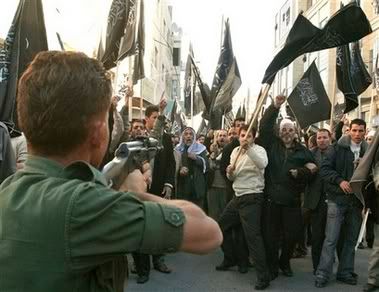
A Palestinian police officer aims his automatic weapon at protesters, during a demonstration against the U.S. sponsored Annapolis meeting in the West Bank city of Hebron

The Calm Before the Storm?

Somehow the tension in the world seems to be easing down. Pretty recently, it all felt like a doomsday scenario; more tension between the US and Iran, state of emergency in Pakistan, more killing in Iraq, the undying conflict in Israel/Palestine, all wrapped up in a cozy blanket of global warming. Yep. It sure felt like we were headed for the end.

All of a sudden, things seem like they are about to improve. President Musharraf of Pakistan has finally decided to bid farewell to his post as army chief, ending a large part of the tension that has built up in Pakistan over the past few years (and most notably in the past month). With the cooking pot about to burst in Pakistan, it was only natural that the instability would reverbarate throughout the region, and considering the fact that India and Pakistan are both hold nuclear powers, as well the Taliban running around just along the border, the outlook wasn't great. Well, finally, the heat seems to have been turned down.

The Israel/Palestine conflict has been a bloody one, with its ups and downs over the past half a century. The past 7 years specifically have left the conflict open with no hope for a solution, and the killing and losses continue in the war-torn region. Finally, however, the Mid-East conference is to be held in Annapolis today with the attendance of more than 40 countries, including the big guns like Saudi and Syria. On the agenda is the discussion of a creating Palestinian state, and it finally seems that the Bush Administration, known for their war-waging initiatives, are actually looking at the possibility of peace instead. Sure, a lot of skepticism surrounds the conference, but there is always the opportunity that something useful may come out of it. Let's hope.

Iraq has been ripped apart over the past 30 years, first by the Saddam Hussein regime, the Iran/Iraq war, the 1990 Gulf War, the sanctions that followed, and the 2003 war and the chaos it brought along with it. President George Bush and the Iraqi Prime Minister Nuri Al-Maliki vowed yesterday to set a July 31, 2008 target date to formalize US-Iraq economic, political, and security relations. Under the document signed and made public Monday, the new security pact would trigger the end of UN sanctions imposed after Iraq's invasion of Kuwait in 1990 and return full sovereignty to the government in Baghdad. Is there finally hope for the people of Iraq? After the anarchy they've had to endure for years and years? Well, it seems like there just might be a possibility.

Yes, the tension in the world seems like it just might diminish. But is this just a temporary hesitation before all hell comes loose?

-------------

The Doomsday clock is a symbolic clock that has kept been maintained since 1947; it shows the time as a number of minutes to midnight, where midnight symbolizes catastrophic destruction. The number of minutes to midnight is moved forward or back depending on major world events. In our current situation, the world is at 5 minutes to midnight.

21 November 2007

Bye bye, Dollar


It's been a long few years, here in the GCC. Since 2001, the price of oil has been increasing, after remaining more or less controlled under the $30 level. Inflation levels in the region have been growing, and with the value of the US dollar falling quickly (and with our GCC currencies all linked to the value of the dollar) inflation has been pushed to even higher levels.

Inflation is a normal part of any growing economy. Economy grows, people get richer, demand increases, prices rise. It's as simple as that. However, there are reasonable levels to inflation, and what has been happening in the GCC is far from reasonable.

Have you realized almost everything has seemed to become more expensive? Rent? Land prices? Cars? Imports?

Why? Besides regular inflation, being linked to the value of the dollar means it costs us more to import goods. Pound Sterling was around $1.36 back in 2001, and this month it reached $2.11. Euro was around $0.83 back in 2001, and just yesterday it reached $1.48. Almost double. A similar situation goes with the other major currencies, and the dollar is forecasted to decline even further.

With the steady increase of oil prices after 2001, effectively tripling from around $30 to edging on the border of $100, the Gulf economies grew tremendously. Rapid growth has it's disadvantage, the greatest being inflation, and without increasing the value of the Gulf currencies (through being pegged to the dollar), inflation hits us hard.

So what happens next? Well, Kuwait took the first step a few months ago and dropped the dollar peg in favor of a currency basket (ie, pegged to a mixture of currencies), and the Kuwaiti Dinar has been rising in value since. The rest of the GCC is still dollar-pegged though. In reality, the Kuwaiti Dinar was only forced to peg in late 2003, and was looking for any excuse to de-peg.

Inflation is now causing societal and political issues; imports getting more expensive, workers demanding salary increases, and so on. The next step should come from either the UAE or Saudi, whose economies are under severe pressure to revalue. Bahrain or Oman are hardly likely to effect a decision, as they have shallow markets and have been sheltred from speculative inflows, and will probably follow suit regarding what Saudi/UAE decide. Qatar does have the highest inflation in the GCC, but compared to the other member countries, it has started to diversify it's economy later, and still has an under-developed currency market; also with a higher GDP than it's neighbors, it has a higher tolerance for inflation.

The situation with the UAE is a little off, however. Yesterday, the UAE decided to increase public sector wages by 70%. This stated, it might mean that they are against revaluing their currency, which would probably cause some issues with the other countries that want to revalue.

The GCC Supreme Council meeting is in December, and with the mounting pressure, something has to happen. In September, the decision was made to delay a monetary union between the GCC. However, for a commitment towards a common market and closer economic cooperation, perhaps a semi-mutual agreement needs to be made in terms of the dollar-peg situation, as no country will be able to drop the peg unilaterally without the consent of the other members.

The effects on global markets would not be small, however. The volume of funds under management by the GCC are around $1.5 trillion, and any abrupt shift could disturb the global market, and so such an issue needs to be very carefully addressed (ie, an already weak dollar could take a severe hit, if the market sees a de-peg as a sign that the GCC has turned it's back on the dollar).

Either way, the inflation problem is a very serious issue, and if left unaddressed it could damage the economy, and specifically the construction sector which affects a large part of the economic activity in the region. Realistically though, a currency revaluation is required, but not necessarily enough. A revaluation should be correlated with the size of the adjustment/inflation, which should probably be between 10-20%. However, with the Gulf countries being inherently conservative, it is much more likely that a realistic adjustment would come to around 4-5%. Therefore, other measures need to take place to reduce GCC inflation. However, it will buy the countries some time to formulate other policies controlling this issue.

All said, lets keep our eyes on the GCC Supreme Council meeting in December.

18 November 2007

Stuck in the Middle

Our very own favourite party-starter, Ahmadinejad, visited Bahrain yesterday. If you noticed helicopters around, road blocks, or riot police stationed around various areas of Manama yesterday, now you know why.


Anyhow, the Iranian president met with our own King Hamad, and discussed strengthening economic ties between our countries, the current crisis in the Gulf, and kicking out the US from the region.

Now it's this last point I want to focus on; i've always considered Ahmadi as the fun-loving type; he's been known for taunting the US, pushing them to the brink of war, and then backing up and saying all he wants is peace with that huge smile he's well famous for. He's done this numerous times, and it's something a little like watching a comedy show.


History between Iran and America hasn't been great recently. Since the days of the hostage crisis at the US Embassy in Iran, there's been a whole lot of tension between the two countries, and it's finally reached the point where we are at the brink of war.

Scary.

I really don't understand Ahmadi; he's either totally naive, or very, very clever; he can't be in between. I mean, he talks of brushing America away as if they were a little bit of dust settled on his desk, rather than the biggest military power in the world. Is he pushing for a war? Does he believe America is at its weakest point right now, with a huge budget deficit, a number of wars going on in different places and hardly the ability to sustain another one in Iran? Or perhaps that the American people have had enough of war and are against any notion by the White House to launch another one?

Or perhaps he really does believe Iran can totally wipe out America. And Israel. And everyone else who dares attack them.

Don't get me wrong; Iran is a very formidable force. The Iranians are well known to be ferocious fighters who will put up one hell of a fight. And if it does happen, this war will probably shock the world; we are definately in for a few suprises.

War seems inevitable, from the US standpoint. From the Iranian standpoint, it seems like nothing will happen. Either way, we're stuck here in the middle wondering what the hell is going to happen over the next few months.

What are your thoughts?

------

Something to think about: for those who used to watch cartoons back in the 80's/early 90's, remember Adnan wa Lina (Conan, Boy of the Future)? I loved that cartoon; it was basically the world after the third world war, which was pretty much completely destroyed... The introduction started off with saying "World War 3 started in the year 2008..."

6 September 2007

Moving too fast for our own good?

Standing at a pivotal location in the Middle East, Bahrain had the potential to be one of the strongest economies in the region. With the discovery of oil early last century, and the boom that followed placing the dependancy of the strongest world economies on oil, Bahrain had the potential to actually become one of the strongest economies in the world.

However, a few mistakes here and there, a few mis-calculations, a few bad judgements, a few people not taking action.. And Bahrain stayed stagnant..

Don't get me wrong, Bahrain's economy is growing, and growing pretty quickly. However, for the potential it had, it is nowhere near what it could have been. Other countries in the region jumped at the opportunity. The United Arab Emirates, and Dubai specifically, decided to take hold. They built the infrastructure, they created a new system, they opened up the market. "Build it and they shall come", it was once said. And yes, they came.

Dubai is now considered a hub in the region; whether it is business, technology, tourism, or any of the other specialities Dubai offers, it has taken control. Starting from almost scratch in the early '90's, in under ten years Dubai has created one of the fastest growing economies over the globe. And in the few years since then it has almost doubled in size. Unbelievably fast construction, unsurpassed growth, mammoth investment; Bahrain was left in the dust by comparison, and the economy of Bahrain, strong as it is, is dwarfed by the colossal Dubai only a few hundered miles away. It should have been Bahrain that had control of the region.

Obviously there is a lot of money in the region; unbelievable oil reserves have brought massive amounts of money into the area, and with the Dubai economy growing, everyone starts looking at it as a role model. Now it is time for Bahrain to pick up and take back what was originally supposed to be its own.

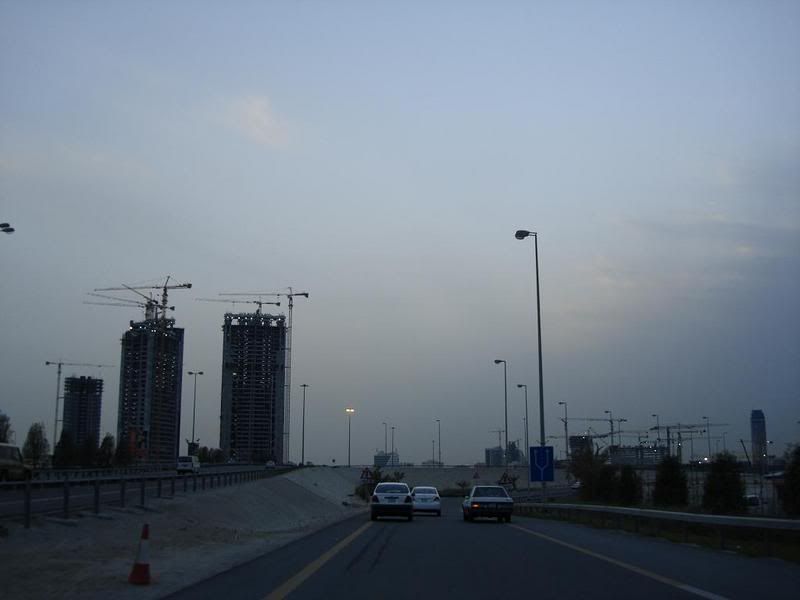
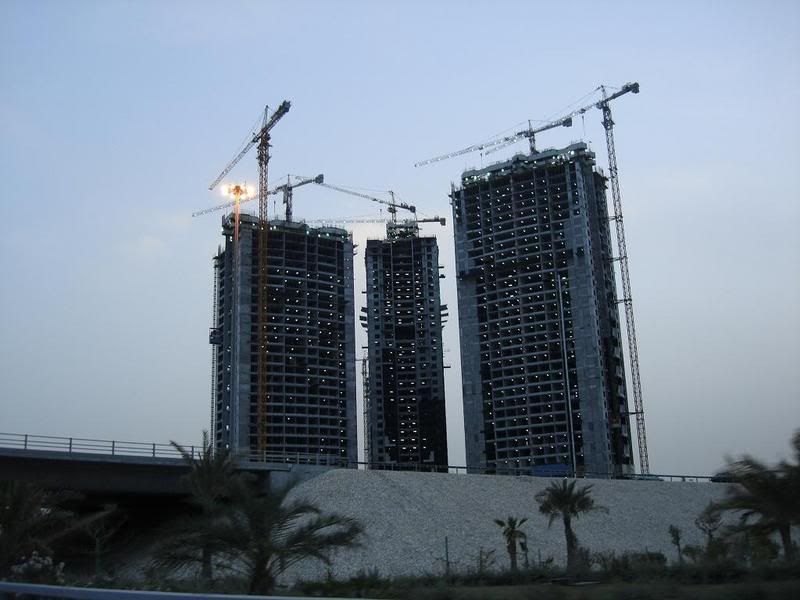
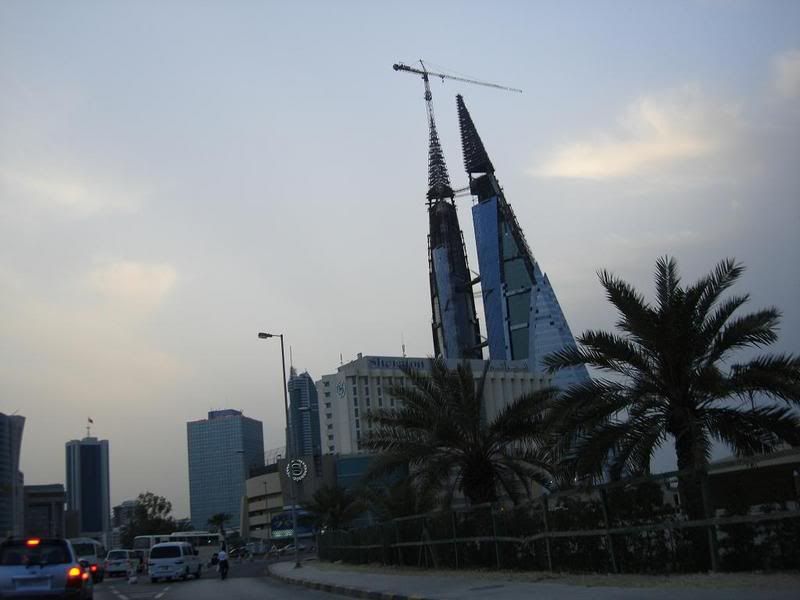
So I look around me here in Bahrain; from what was relatively slow growth in comparison, the past few years have signalled unbelievable construction. But only very recently, the past 3 years especially, the first Formula One circuit in the region was built, building of the Bahrain World Trade Center in Bahrain is on its way, the Bahrain Financial Harbor, and everywhere I drive I see some sort of great construction. Areas that were previously dead for years are blowing up; restaurants, coffee shops, new stores, all the way from Riffa to Juffair. Apartment buildings in Muharraq, new commercial buildings in Manama, land being reclaimed to build more and more and more. New companies, new banks, new financial institutions are popping up all over the country. Real estate is going crazy, prices in some areas are probably around 300% where they were 6 or 7 years ago. Prices are increasing. We are where Dubai probably was 10 years ago; and that is an amazing stage of growth.

Are we moving too fast though? We have always been a very small and close-knit community. Growth is promoting people working longer hours, families aren't as close any more, people get busy making money. And while some grow and start earning unbelievable incomes in their new jobs dealing with investments and real estate, and the general boom in the economy, others stay stagnant, earnning the same wages they have been earning for the past 10 years. And yet prices go up. Investment in the country is reaching new levels; investors buying and selling to other investors for large profits, who in turn sell to other investors for even higher profits.

Can we sustain this environment? Or will someone get hurt eventually? What about the people who cannot keep up with this growth; the lower-income earners? And what will the end to all this growth be? Is it a bubble, growing slowly, and then quicker, soon to reach a point where nothing will be able to help it grow but...

..burst?

Where will everyone be then? Lets just keep an eye on whats going on. Take a look at what happened in the late 70's and early 80's. Lets just be very careful....
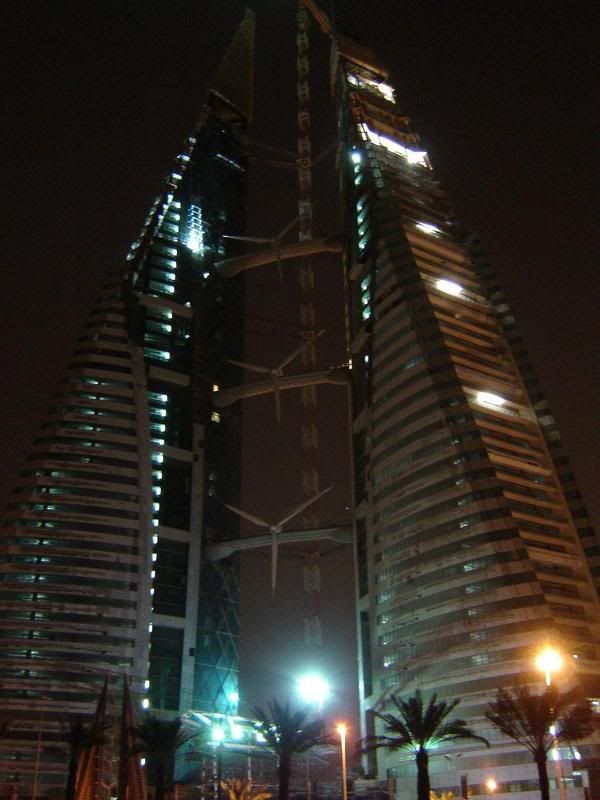
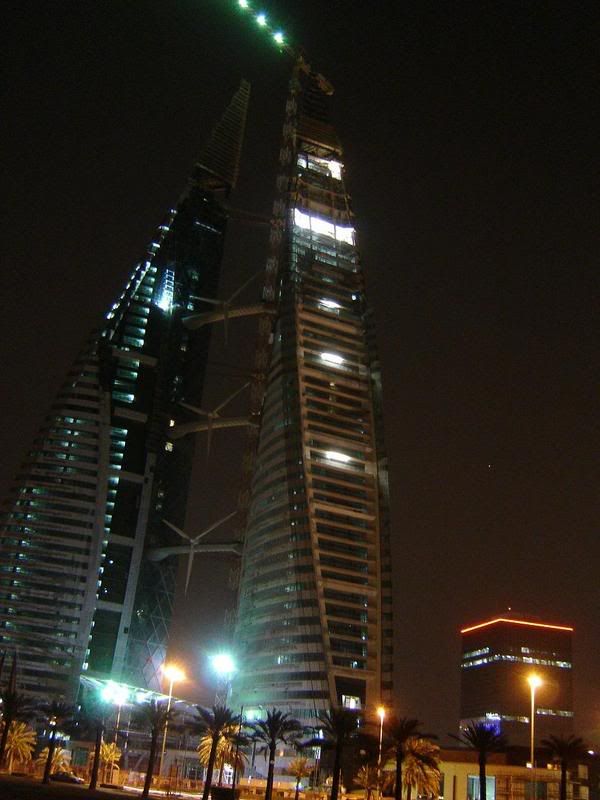

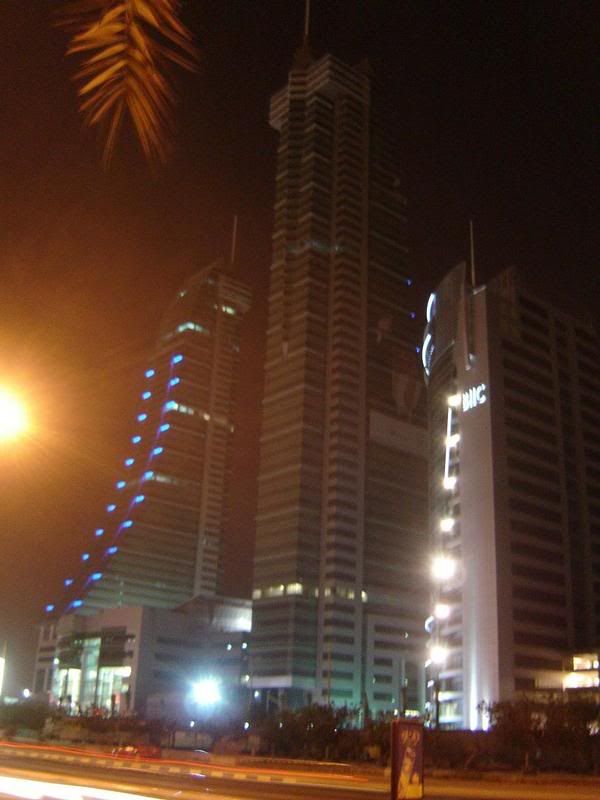
Bahrain World Trade Center in its last stages of completion...
Photobucket - Video and Image Hosting


Bahrain WTC next to Sheraton Tower. A while back this was probably the tallest building in Bahrain
Photobucket - Video and Image Hosting


Bahrain Financial Harbor; stage 1 is pretty much ready
Photobucket - Video and Image Hosting


Photobucket - Video and Image Hosting


Construction everywhere (a view of Seef Area)
Photobucket - Video and Image Hosting


Abraj Al Lulu (Lulu Towers)
Photobucket - Video and Image Hosting


Bahrain WTC taking over Bahrain's Skyline
Photobucket - Video and Image Hosting

15 July 2007

Tallest Tower in the Smallest Country

Well, not exactly.

Bahrain isn't really the smallest country in the world. But the way the reports are going, we just might have the tallest tower (or almost) in the world right here.

Yup; you heard right. Seems the new fad has turned to which country has the tallest tower. Dubai started it in the region by building the Burj Dubai, which some estimate will reach somewhere between 800 and 900m. Also in Dubai, another tower is being planned; Called The-Burj, which should hit something a little past a kilometer. Kuwait is also planning its own tower, at 1,001m, Mubarak Al-Kabeer, and Bahrain will also have one, not yet named but blueprints state it will reach 1,022.

So yes, we just might have the tallest tower in the world here (nose twitches)

Excuse me if I don't like the sound of that too much. First of all, listen to the tone; Dubai will have two, Kuwait will have one, Bahrain will have one etc... You know that Qatar will definately join in the "whose got the bigger one" game, and then Saudi, not to be outdone will come up with a 10km high tower or so.

Guys, calm the hell down. This is NOT a game; but obviously some people seem to think it is. It's always been in the gulf countries' blood; they love to show off how much money they have, how developed they are, etc. But don't do it this way. It's so obvious something is going to go terribly wrong here.

Just because you have the money to build it, doesn't mean you can support it. Heck, Al Moayyed Tower in Bahrain was built as the tallest tower in the country a few years ago and it didn't have enough car parks; that caused a total mess. Do you think we have the expertise or the facilities to combat a fire or a disaster should it happen?

Sitting in the 12th floor of NBB tower, I could hear creaking, and the windows shivering as the wind hit them. That didn't sound safe at all, and pretty scary actually. I was also told that NBB tower wasn't exactly the best engineering feat in the world. Hmm...

Warsaw Radio Mast was completed in 1974 as the worlds tallest building at 646 meters. It collapsed in 1991. Yes. Things like this DO happen. But its like kids playing with dynamite here; they don't realize how big a deal this is.

These new towers being built now are just status symbols; trying to show off to each other, or stand out to the world. My personal thought is, when we finally build our own Bahrain tower, Bahrain is going to sink. Or maybe that's just my personal wish, but whatever.


Another thing; when I was a kid my mom used to tell me stories about the signs of judgement day, and how we could tell when it was approaching. Now I look at a few things around me a little closer, and it starts to get freaky.

Example; almost 20 years ago, my mother told me about people talking to their hand to other people on the other side of the world, as if they were infront of you. I had no idea what that meant back then, but now I see the 3G telephones with cameras and you can talk to "your hand" and speak to someone on the other side of the world. She talked of so many different signs, that now I see start to pop up here and there.

But one of the signs (probably the scariest one since I see it now and i'm sure no one could have predicted it 20 years ago, let alone hundereds of years ago when these prophecies were made) is "The Shepherds of Arabia will compete in the construction of tall buildings"

This sounded ridiculous back then. But now, the Middle-East, once a desert full of shepherds, are not only competing in building tall buildings. But the TALLEST.

Freaky stuff.


http://www.theage.com.au/news/world/one-kilometre-high-and-counting/2007/07/14/1183833838782.html
One kilometre high and counting

Skyscrapers are back, with a vengeance. Stephen Cauchi reports on the race to construct the world's tallest building.

EVEN now, only half-finished, it looks staggering. Just last Wednesday, it became the second tallest skyscraper ever built, surpassing Taiwan's 509-metre Taipei 101. It will overtake Sears Tower in Chicago, CN Tower in Toronto and television masts in North Dakota and Warsaw to be the tallest structure ever built by mankind.

Burj Dubai, in the United Arab Emirates, will usher in a new era of skyscrapers. Although its final height is being kept a secret, it's conservatively estimated it will reach 818 metres. Some tip it will be 940.

Burj Dubai will break records for height in a way not seen since the Eiffel Tower, which on completion in 1889 was nearly twice as high as the next tallest structure, the Washington Monument. It will be hundreds of metres taller than the Warsaw Radio Mast, which at 646 metres held the record as the world's tallest structure until its collapse in 1991.

But Burj Dubai may not hold the record for long. Another Dubai skyscraper, Al Burj, is slated to begin this year with a rumoured height of 1.2 kilometres. More tentatively, two other kilometre-tall towers are planned in the region: the 1001-metre Mubarak al-Kabeer in Kuwait and a 1022-metre tower in Manama, Bahrain.

These modern-day Towers of Babel — an apt comparison given their Middle East location and multicultural construction crews — are driven by symbolism rather than necessity, according to the managing director of Australian construction company Grocon, Daniel Grollo. "They like to build tall as a sign of the prosperity of the country — they have the money to push the boundaries."

Grocon, which was to have built the now-abandoned 560-metre Grollo Tower in Melbourne, has been a consultant on the Al Burj tower and may yet be involved in its construction.

The 818-metre Burj Dubai is impressive enough. Will the 1.2-kilometre Al Burj become reality? "My experience after having travelled to the Middle East over the last six to seven years has been that when they put their mind to something and say they're going to do it, they do it," said Mr Grollo, who said Al Burj had yet to receive planning approval. "Dubai is a very can-do city."

Indeed. The city's recent projects include several man-made archipelagos harbouring ultra-luxurious hotels; the biggest shopping mall in the world; the longest fully automated rail system in the world; massive theme parks and a colossal airport. Impressive for a town of only 1.5 million. And now, restoring a title to the region once held for millennia by the Great Pyramid of Giza, the world's tallest building.

Burj Dubai's 160 floors will be filled by hotel rooms, private apartments, and corporate offices, and serviced by 65 km/h lifts, the world's fastest. They'll need to be. Lifts, according to skyscraper architect Henry Feiner of Harry Seidler and Associates, are one of the major constraints on skyscrapers. "If you try to put in enough lifts to service 150-200 floors, you'll end up with no floor space on every floor. It's all taken up by lift shafts," he says. The solution — although time-consuming for those on the upper floors — is to design the building as one skyscraper stacked on another.

"It becomes a series of 50-storey buildings stacked on top of each other where you have express shuttle lifts taking you to sky lobbies — a platform at the 50-storey level — and then you start all over again."

But, says Feiner, there is no technological reason why skyscrapers could not go to two kilometres or even higher.

Kim Dovey, Professor of Architecture at Melbourne University, said high-rise buildings were economical, but only to a point. "The economies of scale go up dramatically in buildings up to about 10 storeys, and they continue to go up until about 40, and then they turn the other way — they become very inefficient buildings.

"After about 40 it becomes faintly ridiculous." That's because, Professor Dovey said, more and more of the building was taken up by lift shafts and servicing tunnels needed to transport people, utilities and goods to ever-greater heights.

But practicality is not the point. "It's an attempt by Dubai to put itself on the world stage."

He admits he finds such buildings inspiring "from a distance and inside looking out" but otherwise is not a fan.

"I think they're kind of stupid. The little kid that really wants to be noticed — trying too hard."

28 June 2007

Nothing is Certain but Death and Taxes

The above phrase, mentioned by a number of authors during the course of history, was inscribed in the form we are most familiar with; "In this world nothing can be said to be certain, except death and taxes", by Benjamin Franklin in 1817.

And yet for a while, those of us living in the GCC were under the rosy impression that we had managed to evade one of the two, completely escaping the terrible grip of taxes. But Franklin's quote rose to the light to promote its truth, and suddenly the tax-haven that is the GCC is seeing that dirty three letter word creep up slowly on us.

It couldn't have lasted for ever though. Any society that expects to grow and keep up with the rest of the world probably cannot survive for too long without taxes; Taxes provide revenue for the government to invest in the infrastructure, the enforcement of law and order, and so on. Taxation is needed to redistribute funds around a country, moving money from the hands of the rich, and providing funds for the poor, in order to have a more balanced society. Taxation can also be used to reprice certain goods in the market, to make certain items or services more or less desirable (higer taxes to cut down on tobacco sales, for example).

Dubai has decided to slap a toll-booth onto the Shaikh Zayed Road; the main highway through Dubai, also leading to both Abu Dhabi and Sharjah on the North and South, respectively. Now, if you live in Dubai, there is a pretty high chance that you use that highway, and probably on a daily basis.

Commuters are infurious; most, if not all, are against this 'indirect taxation', and some have even started to sign a petition requesting a delay on the decision. Sure, I can relate; no one likes a tax placed on them, as an individual. But take a look at the bigger picture here:

Tolls on driving through the highway mean:

- Less people driving through it, unless they really have to
- Less congestion on the road, due to the decreased number of drivers
- People might start car-pooling in order to divide toll costs between them;
- Leading again, to less congestion, and less pollution produced
- More money generated to provide for road repairs, expansions, etc

Doesn't seem like as much of a bad idea now does it? The truth is, taxes can benefit an economy if used in the right way. The rest of the world has taxes anyway, why should we be any different? Even if the government generates a comparatively greater income from oil exports, that supply won't last for ever. There are other exports, foreign investments, tourism projects, and all contributing towards a country's income, but tax is a necessary evil.

The Bahraini population has been complaining about the 1% unemployment deduction (ie, tax) that has been imposed on them this month. A country that previously knew nothing about taxes has been shocked to learn that, yes, some of your money can be involuntarily taken away from you. Yes, that is a law. No, it isn't stealing, and it probably isn't "haram" either, as some religious scholars have argued. Yet people have taken to the streets to demonstrate, one after the other writing articles of discontent in newspapers, magazines and other local publications.

But to no avail. Taxes are finally here; they are "as certain as death", and whether you like them or not (most probably not), you will have to learn to deal with them. We still haven't felt the real bite though - I don't think 4 Dirhams at a toll booth or 1% of your salary can even be considered a tax. It's more of a rough tickle, preparing you for the real slap in your face that will shortly follow.

VAT (Value Added Tax) on purchases in the UK is 17.5%. In France? 19.6%. In the United States, Federal Taxes on your income can go up to 35% depending on how much you earn (and this does not include State Tax, etc). When I used to work in Boston, I was paying almost 45% of my salary as tax. And those are just a few examples.

So right now, my fellow GCC citizens, we're still getting a free ride.

But we still have one problem.

In those countries, tax is collected, and every single cent is accounted for; payments are auditied, government official salaries are looked at, amounts in the tax funds are under constant surveillance, with verification of where every amount spent from them is spent, and why. Any amounts invested in the infrastructure, pay for the poor or homeless, unemployment, healthcare, etc is published. Tax-payers in those countries know exactly where their money is going.

That is our problem.

Do we know where our money is going?